Generative Engine Optimization (GEO) is how you get your brand and content cited when people ask ChatGPT, Perplexity, Claude, or Google AI Overviews for answers. It is the modern version of SEO built for a world where users read AI-generated answers instead of clicking blue links.
This guide covers what GEO actually is, how each AI engine decides what to cite, the six pillars of an implementation framework, engine-specific tactics for ChatGPT, Perplexity, Claude, and Google AI Overviews, how to measure citations, tool stack recommendations, and a 30-day starter plan.
If you are only optimizing for Google rankings in 2026, you are missing where a growing share of buyer research now happens.
What Generative Engine Optimization Actually Means in 2026
Generative Engine Optimization is the practice of shaping your website content, entity signals, and technical setup so that AI systems reference your brand when they generate answers for users.
The term was coined in 2023 by researchers at Princeton and Georgia Tech in a paper titled "GEO: Generative Engine Optimization". At that time, it was mostly academic. Fast forward to 2026: Google AI Overviews shows up on over 50 percent of informational queries, ChatGPT Search reached over 200 million weekly users, and Perplexity crossed 15 million active users. Buyer research now happens across a mix of Google, AI Overviews, and standalone AI assistants.
The important thing to understand is that GEO is not a replacement for SEO. It is a layer on top of it. Most AI engines still start with search index data. Your organic rankings still matter. What changes is that ranking is not enough anymore. You also need to be structured, cited, and quotable in ways that AI systems can extract.
Our team treats GEO as the third leg of a three legged stool: technical SEO for crawlability and page experience (see our technical SEO guide), content strategy for topical authority, and GEO for AI citation readiness. Miss any leg and the stool falls over.
Why This Matters Right Now
Three shifts in 2024 and 2025 turned GEO from a niche topic into something every marketing team needs on their roadmap.
Shift One: AI Overviews Went Mainstream
Google rolled out AI Overviews to US search results in May 2024 and expanded globally through 2025. By August 2026, the majority of "how to" and "what is" queries trigger an AI Overview. The pages cited inside the overview get visibility. The pages ranking below it get less clicks than before. Google's own AI Optimization Guide confirms this is the direction of travel.
Shift Two: Standalone AI Assistants Became Search Tools
ChatGPT launched Search mode in October 2024. Perplexity grew from research niche to mainstream. Claude added web search. All of these tools cite sources. When a buyer asks any of them for recommendations, some brands show up and others do not.
Shift Three: Buyer Behavior Changed
Recent research from Bain and Company found that around 40 percent of B2B buyers now use AI assistants during vendor research, and that number is climbing. If your competitors show up in those AI answers and you do not, you are losing deals before the buyer ever visits your site.
How AI Engines Actually Decide What to Cite
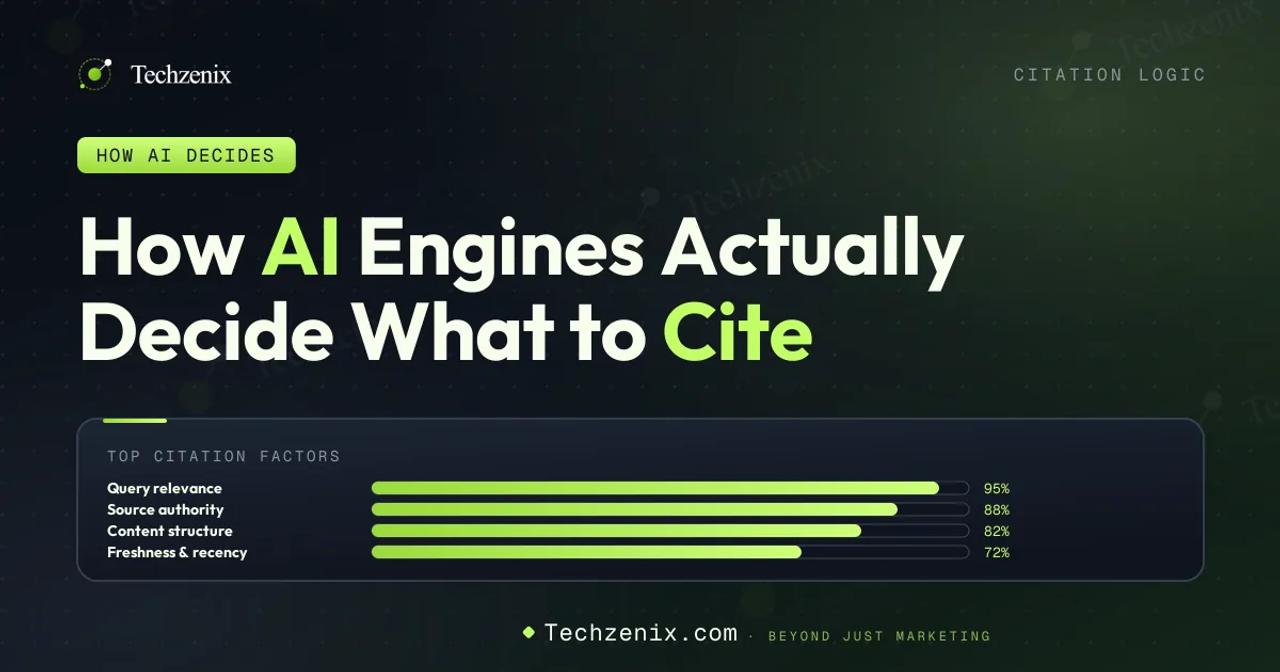
This is where most GEO guides get vague. Each engine works differently, and understanding the mechanism is the difference between guessing and executing.
Google AI Overviews
Google AI Overviews start with the top ranking organic results for the query, then use a Gemini based model to synthesize an answer and cite selected pages. The candidate pool is essentially your existing top 10 organic. If you rank on page 2 for a query, you almost never get cited. The exceptions are highly authoritative sources (Wikipedia, government sites, major news) which the model sometimes surfaces regardless of ranking.
Ranking on page 1 is necessary but not sufficient. Within the page 1 pool, Google's model prefers pages that answer the question directly in the first paragraph, use clear structure, cite sources, and have strong entity signals for the topic.
ChatGPT Search
ChatGPT Search uses a combination of Bing search results and its own real time web browsing through the SearchGPT crawler. When a user asks a question that requires current information, it runs a search, extracts content from a handful of pages, and generates an answer with citations.
The mechanism favors pages that Bing ranks well for the query, pages with clean HTML structure (SearchGPT struggles with heavy JavaScript sites), and pages with clear author or brand attribution.
Perplexity
Perplexity uses its own crawler (PerplexityBot) plus real time search from multiple search engines including Bing. Every answer includes numbered source citations. Perplexity has published guidance that it weighs recency heavily, prefers pages with clear structure, and gives higher weight to sources with strong author bylines.
Practical implication: recently updated content gets cited more often than older content, even when the older content ranks higher in traditional search.
Claude Search
Claude uses its own web search capability and cites sources when it retrieves fresh information. Claude's citation preferences skew toward well structured content with clear factual claims and identifiable authors. Anecdotal patterns from tracking show Claude cites fewer but higher quality sources per answer compared to Perplexity.
Bing Copilot
Bing Copilot uses Bing's index directly. If you rank well in Bing, you have a solid chance of citation. Bing's index is smaller than Google's but shares many ranking factors. Optimizing for Google usually helps Bing, with some notable differences (Bing weights social signals and IndexNow submissions more heavily).
Gemini
Gemini uses Google's index and often shares citation patterns with Google AI Overviews. Content that ranks well in Google Search tends to also appear as Gemini citations.
The Six Pillars of GEO
Every effective GEO implementation covers these six areas. Skip any one of them and you leave citations on the table.
Pillar 1: Entity Recognition
AI models work with entities more than keywords. An entity is a distinct concept the model recognizes: your brand name, your founder, your product category. If AI systems recognize your brand as an entity associated with your topic, you become citation candidate. If not, you are invisible.
How to build entity recognition:
Claim and populate your Google Business Profile if you have local presence
Set up Wikidata entries for your brand and key people
Publish sameAs schema linking your brand across social profiles, Crunchbase, LinkedIn
Get mentioned on authoritative third party sites in your category
Pillar 2: Structured Data and Schema
Schema markup helps AI systems parse your content faster and more accurately. The types that matter most for GEO in 2026: Article, FAQPage, HowTo, Organization, Person, Product, Review, and Breadcrumb.
The specific implementation is less important than making sure every important page has schema that describes what the page is about, who wrote it, and when it was published. AI models frequently pull data directly from schema when generating citations.
Pillar 3: Answer First Content Structure
Content optimized for AI citation answers the question in the first paragraph, then expands. This is the opposite of most SEO copywriting where writers pad the intro to reach word count.
For every important page, ask: if an AI system reads only the first 100 words, does it get the answer? If not, restructure.
Pillar 4: Source Citations and Author Authority
AI models look for source cited content because it signals reliability. Every substantive claim in your content should link to a supporting source, ideally a primary source (research paper, official documentation, first party data). Author bylines matter too. A page written by a named expert with a clear bio gets weighted higher than an anonymous piece.
Author bio pages, LinkedIn presence, and publication history all feed into the model's assessment of whether to trust and cite an author.
Pillar 5: Content Freshness
AI engines prefer recently updated content, especially Perplexity and ChatGPT Search. A page updated three months ago gets cited more often than the same content untouched for two years. Building a schedule for reviewing and refreshing top pages is now part of maintenance SEO.
Pillar 6: Technical Accessibility to AI Crawlers
AI crawlers (GPTBot, ClaudeBot, PerplexityBot, Google Extended) are technically similar to search crawlers, but they have their own quirks. Allow them in robots.txt if you want to be cited (blocking is a legitimate choice, but understand the tradeoff). Keep server response times low. Make sure content is in HTML, not JavaScript rendered only.
Site speed matters here too. See our core web vitals guide for the technical performance side.
Engine Specific Playbooks
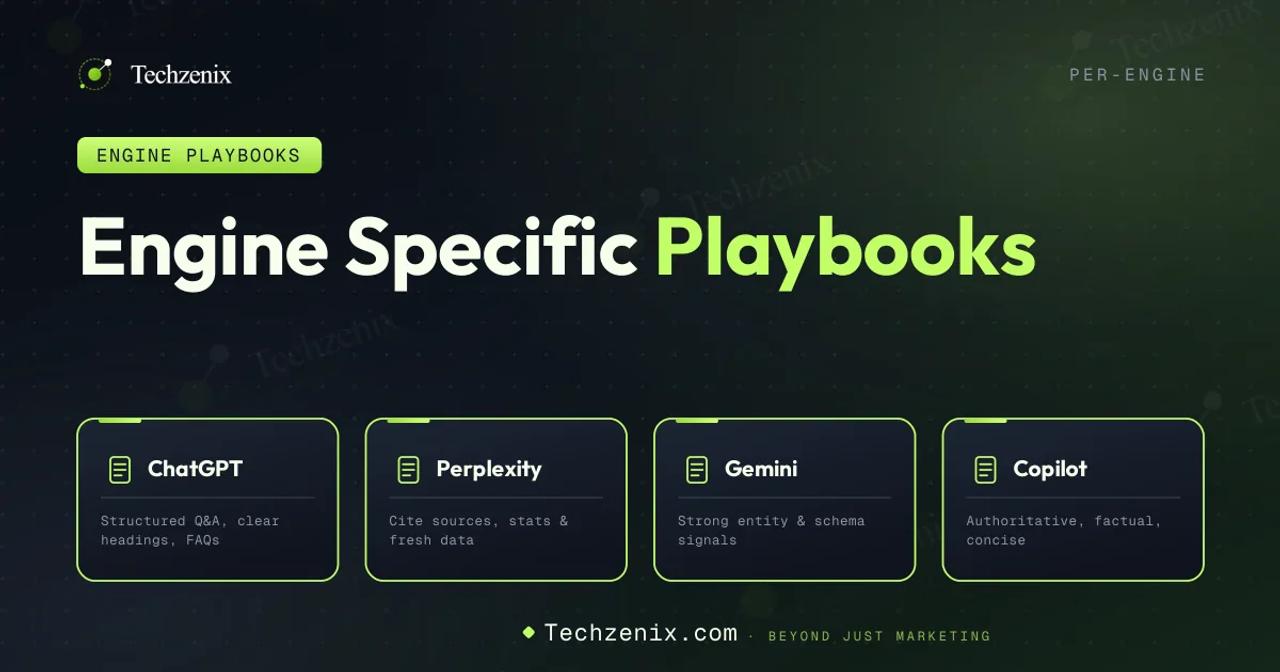
Each AI engine rewards slightly different signals. Here is what actually works for each in 2026.
Getting Cited in Google AI Overviews
Rank in the top 10 organic for your target query. This is the ticket to entry.
Structure your content with clear H2 sections that could stand as answers to sub questions
Add FAQ schema for questions related to the topic
Cite authoritative sources in your content (Google's model prefers pages that themselves cite well)
Keep paragraphs concise and factual. Long meandering intros hurt citation odds.
Getting Cited in ChatGPT Search
Focus on Bing indexing (ChatGPT Search relies on Bing). Submit sitemaps through Bing Webmaster Tools.
Allow GPTBot and OAI-SearchBot in robots.txt
Use clean HTML. ChatGPT's crawler handles JavaScript but favors static HTML content.
Publish clear author bios with LinkedIn links
Include primary research or original data when possible. ChatGPT weighs original sources higher.
Getting Cited in Perplexity
Update content frequently. Perplexity heavily weights freshness.
Allow PerplexityBot access
Include clear publication dates and "updated on" timestamps
Use numbered lists and structured data. Perplexity's model extracts these efficiently.
Build presence on Reddit and Quora. Perplexity often cites community discussions.
Getting Cited in Claude Search
Allow ClaudeBot in robots.txt
Focus on factual density. Claude prefers content with high information per word.
Named author with clear credentials increases citation odds
Long form authoritative content gets cited more often than short posts
Getting Cited in Bing Copilot
Optimize for Bing search rankings. Submit through Bing Webmaster Tools and IndexNow.
Include structured data with clear schema types
Bing weights social signals. Cross post content and get shares.
Content Structure That AI Systems Actually Reward
Beyond the six pillars, the way you structure individual pages matters. Here is what our team has seen work across client sites in 2026.
Chunk Optimized Sections
AI systems process content in chunks (usually 100 to 500 tokens each). Every H2 section should stand as a complete thought that answers a specific sub question. If a reader landed on that section alone, would they get value?
Direct Answer Paragraphs
Under every H2 that poses a question, the first paragraph should answer the question directly. Not "here is some background context" but "the answer is X. Here is why."
Comparison Tables
When comparing options (tools, methods, providers), a table dramatically increases citation probability. AI models find it easier to extract and cite tabular data than prose.
Clear Source Attribution
Every claim that includes a statistic or research finding needs a linked source. "Studies show" is not enough. "Research from Bain and Company found 40 percent of B2B buyers use AI assistants (link)" is what AI models want.
FAQ Sections
A dedicated FAQ section at the bottom of a page, with FAQPage schema, catches long tail queries that AI Overviews and Perplexity frequently surface. Aim for 8 to 12 questions per major page.
How to Measure Whether GEO Is Working
Traditional SEO metrics (rankings, organic traffic, conversions) still matter but they miss the AI citation dimension. Here is how to actually track GEO performance.
Manual Citation Tracking
The most reliable method is running your target queries through each AI engine weekly and logging which sources get cited. Build a simple spreadsheet with columns for query, engine, cited sources, and whether your brand appeared. Do this for your top 20 buyer research queries.
This is tedious but it is the ground truth. No tool is perfect, and manual tracking builds intuition for what works.
Automated Tracking Tools
Several tools now automate AI citation tracking. The category is young and rapidly evolving.
| Tool | What It Tracks | Best For |
|---|---|---|
| Otterly.AI | Brand mentions across ChatGPT, Perplexity, Gemini, Claude | Full spectrum monitoring, mid-market and enterprise |
| Peec AI | AI search rankings and citation share of voice | Share of voice tracking against competitors |
| Profound | AI answer engine analytics and prompt tracking | Enterprise teams with dedicated budget |
| Ahrefs Brand Radar | Brand mentions in AI-generated responses | Teams already using Ahrefs, integrated workflow |
| Semrush AI Toolkit | AI visibility and mention tracking | Teams already on Semrush, integrated workflow |
Our recommendation for most teams: start with manual tracking of top 20 queries to build understanding, then layer in an automated tool once you know what you are measuring and why. Buying a tool before you understand your baseline usually wastes budget.
Five Mistakes That Kill AI Citation Odds
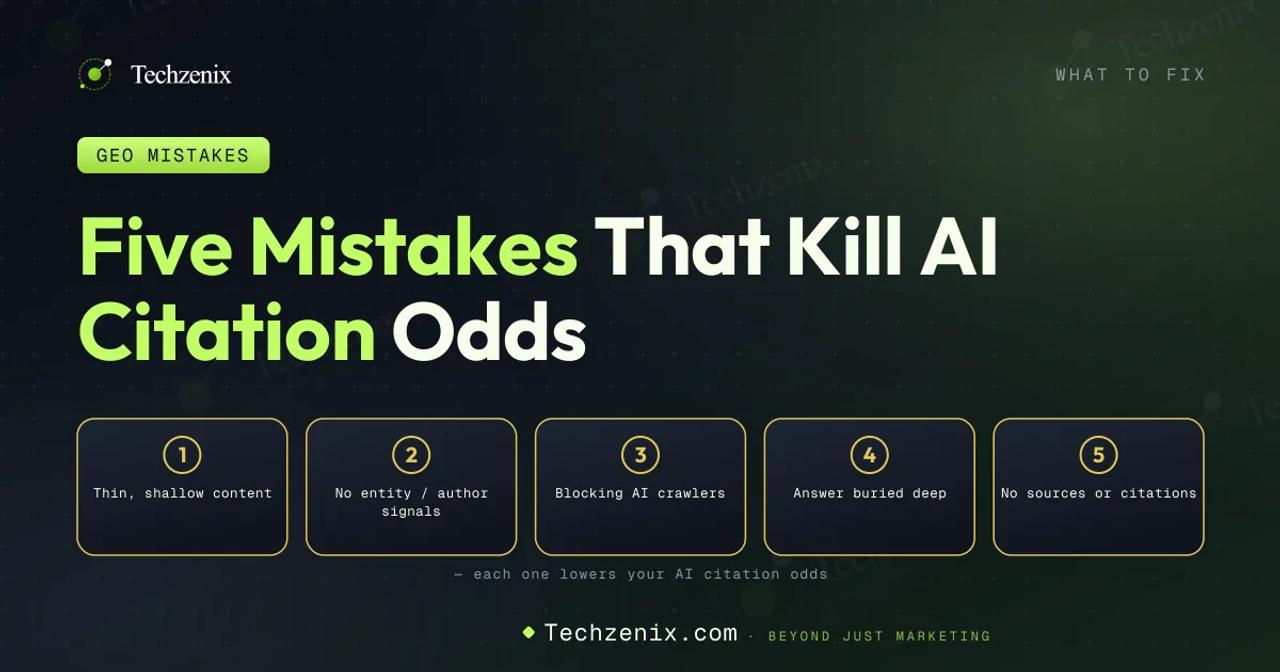
Mistake One: Treating GEO as a Separate Project from SEO
GEO builds on SEO fundamentals. If your site has poor technical SEO, thin content, or weak authority signals, no amount of GEO optimization saves you. Fix the foundation first.
Mistake Two: Ignoring Bing
Bing powers ChatGPT Search and heavily influences other AI engines. Teams that only optimize for Google leave ChatGPT citations on the table. Submit through Bing Webmaster Tools. Use IndexNow. Track Bing rankings alongside Google.
Mistake Three: Blocking AI Crawlers Without Understanding the Tradeoff
Many teams saw "AI is scraping our content" and rushed to block GPTBot, ClaudeBot, and others. This is a valid choice for publishers protecting content, but it also means zero AI citations. If citation visibility matters more than blocking training use, allow the crawlers.
Mistake Four: Optimizing Only for One Engine
Each engine works differently. Optimizing exclusively for ChatGPT ignores Perplexity's freshness bias. Optimizing for Perplexity ignores the fact that Claude prefers factual density. Build a strategy that covers all major engines.
Mistake Five: Assuming AI Citations Will Convert Like Search Clicks
AI citations are visibility, not always traffic. Someone reading an AI Overview may never click through to your site but still remember your brand. Measure GEO in terms of brand mention share, not just referral traffic. This shift in measurement is uncomfortable for teams used to click based ROI, but it reflects how buyer research actually works now.
Your 30 Day GEO Starter Roadmap
Here is a practical starter plan for teams new to GEO. Adjust the timeline to your resources.
Week 1: Baseline and Audit
List your top 20 buyer research queries
Run each query through ChatGPT, Perplexity, Claude, and Google (with AI Overview)
Log which sources get cited and whether your brand appears anywhere
Check whether AI crawlers can access your site (test with a crawler user agent)
Week 2: Foundation Fixes
Add or fix schema on your top 20 pages (Article, FAQ, Organization at minimum)
Update author bios with credentials and LinkedIn links
Rewrite the first paragraph of top pages to answer the target question directly
Submit sitemaps to Bing Webmaster Tools if you have not already
Week 3: Content Refresh
Refresh the top 10 pages that get most traffic. Update stats, add current examples, note the update date.
Add FAQ sections to any page that does not have one
Add primary source citations to substantive claims
Restructure H2 sections so each stands alone as an answer
Week 4: Measurement and Iteration
Rerun the top 20 queries and compare citations against your Week 1 baseline
Log improvements in a simple tracker
Plan the next 30 days based on what moved and what did not Where to Go From Here
Generative Engine Optimization is not a fad. AI assistants are now a permanent layer in how buyers research vendors, tools, and services. Brands that get cited in these answers win visibility that compounds over time. Brands that ignore the shift lose share of consideration silently.
If you are just starting, follow the 30 day roadmap above. If your team is stretched thin or you want to move faster, this is exactly what our practice does day in and day out.
Ready to get cited by AI search?
Techzenix runs full GEO engagements for brands who want to show up in ChatGPT, Perplexity, Claude, and Google AI Overviews. We handle everything from technical setup to measurement. Learn more about our generative engine optimization services or request a proposal .
Frequently asked questions
Is GEO replacing SEO?+
No. GEO builds on SEO. Traditional search rankings still drive traffic and still feed AI systems that use search results as their base. Think of GEO as an extension of SEO, not a replacement.
What is the difference between GEO and AEO?+
Answer Engine Optimization (AEO) generally refers to optimizing for direct answer features like featured snippets and Google's answer boxes. GEO includes AEO but goes further, covering standalone AI assistants like ChatGPT and Perplexity that generate synthesized answers rather than pulling snippets.
Which AI engines matter most for GEO in 2026?+
The five that matter most are Google AI Overviews, ChatGPT Search, Perplexity, Claude, and Bing Copilot. Gemini is significant too but overlaps heavily with Google AI Overviews.
Do I need different content for each engine?+
No. The same well structured content typically performs across engines. Where they differ is in weighting (freshness, author signals, structured data), so a single content piece can be optimized for all of them at once.
How long does GEO take to show results?+
For pages already ranking well in search, GEO improvements often show up in AI citations within two to four weeks. For pages with low search visibility, expect three to six months since GEO usually rides on top of SEO fundamentals.
Should I block AI crawlers from my site?+
This is a strategic choice. Blocking prevents your content being used for training but also prevents citation. If your business benefits from AI visibility (most B2B and service businesses), allow the crawlers. If you sell content directly and worry about training use, blocking is defensible.
Which schema types matter most for GEO?+
Article, FAQPage, Organization, Person, and HowTo. Product and Review matter for ecommerce. Breadcrumb helps with site navigation clarity.
Can small businesses compete with big brands in GEO?+
Yes, more than in traditional SEO. AI engines weight content quality and freshness heavily, and they cite Reddit threads and small blogs frequently. A well structured, expert authored piece from a small brand can absolutely beat a generic corporate page.

Ali Hamza is an SEO specialist and digital marketer with 7+ years of experience in SEO, content strategy, WordPress, and online growth marketing. He shares practical insights and industry-based strategies focused on improving search visibility, user experience, and long-term organic growth.