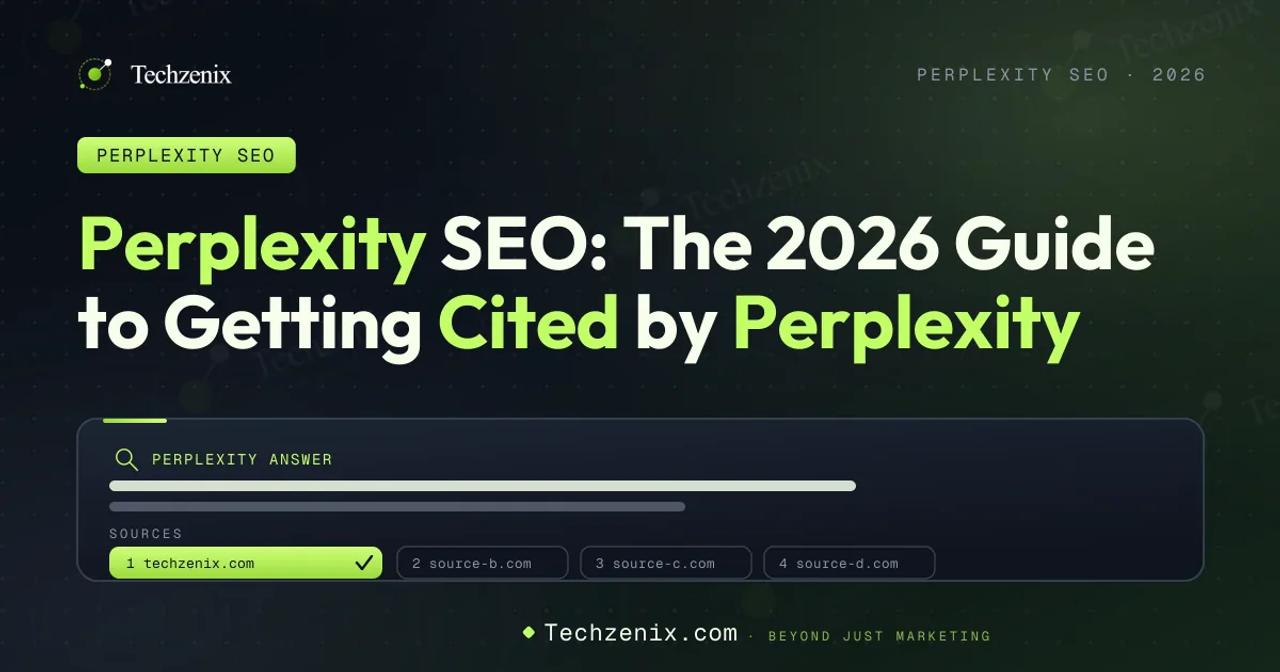
Perplexity crossed 15 million active users in 2025 and became the AI search tool of choice for researchers, journalists, and B2B buyers. Every answer it generates includes numbered citations. If your brand is in those citations, you show up in front of buyers doing serious research. If not, competitors get that mention instead.
Perplexity works differently from ChatGPT and Claude. It weighs freshness much more heavily, cites community discussions frequently, and gives strong weight to authoritative bylines. This guide covers exactly how Perplexity picks sources, what content patterns get cited most, and a practical 30-day plan to move the needle.
Why Perplexity SEO Matters in 2026
Perplexity is smaller than ChatGPT in raw user numbers, but the users who choose Perplexity behave differently. They are researchers, journalists, analysts, and B2B decision makers who need cited sources for what they read. Perplexity built its product around that need. Every answer includes numbered citations linking back to source pages.
For B2B and service brands, Perplexity punches above its weight. A citation in a Perplexity answer often lands in front of exactly the kind of buyer who researches thoroughly before making a decision. This is a higher intent audience than most social channels can offer.
The competitive landscape is also wide open. Compared to ranking on Google, getting cited by Perplexity requires less link authority and less domain trust. Perplexity often cites pages from DR 50 sites when the content is fresh, well structured, and directly answers the question. This is a rare window where smaller brands can beat bigger ones on merit.
Perplexity SEO fits inside the broader Generative Engine Optimization discipline. For the full framework across all AI engines, start with our generative engine optimization guide. This post focuses specifically on Perplexity tactics.
How Perplexity Actually Picks Its Sources
Most Perplexity SEO guides skip this section. Understanding the mechanism is the difference between guessing and executing.
Perplexity Uses Its Own Crawler Plus Real Time Search
Perplexity runs its own web crawler called PerplexityBot. It also pulls real time search results from Bing and other search sources. When a user asks a question, Perplexity does several things at once:
- Rewrites the user question into one or more search queries
- Runs those queries across its indexed content and live search
- Selects a handful of high relevance sources (usually 3 to 8)
- Extracts and synthesizes content from those sources
- Generates the answer with numbered inline citations
Perplexity Modes and What They Mean
Perplexity offers different modes that affect citation behavior:
Quick Search: Standard mode. Cites 3 to 5 sources. Prefers recent authoritative content.
Pro Search: More thorough. Runs multiple searches, cites more sources, prefers primary research.
Deep Research: Multi step research across dozens of sources. This is where thorough authoritative content wins big. Cites 20 or more sources per answer.
Focus modes (Academic, Reddit, YouTube, etc.): Limits citation pool to specific source types. The Reddit focus mode is particularly interesting because it shows how heavily Perplexity trusts community discussions.
What Makes Perplexity Different From ChatGPT and Claude
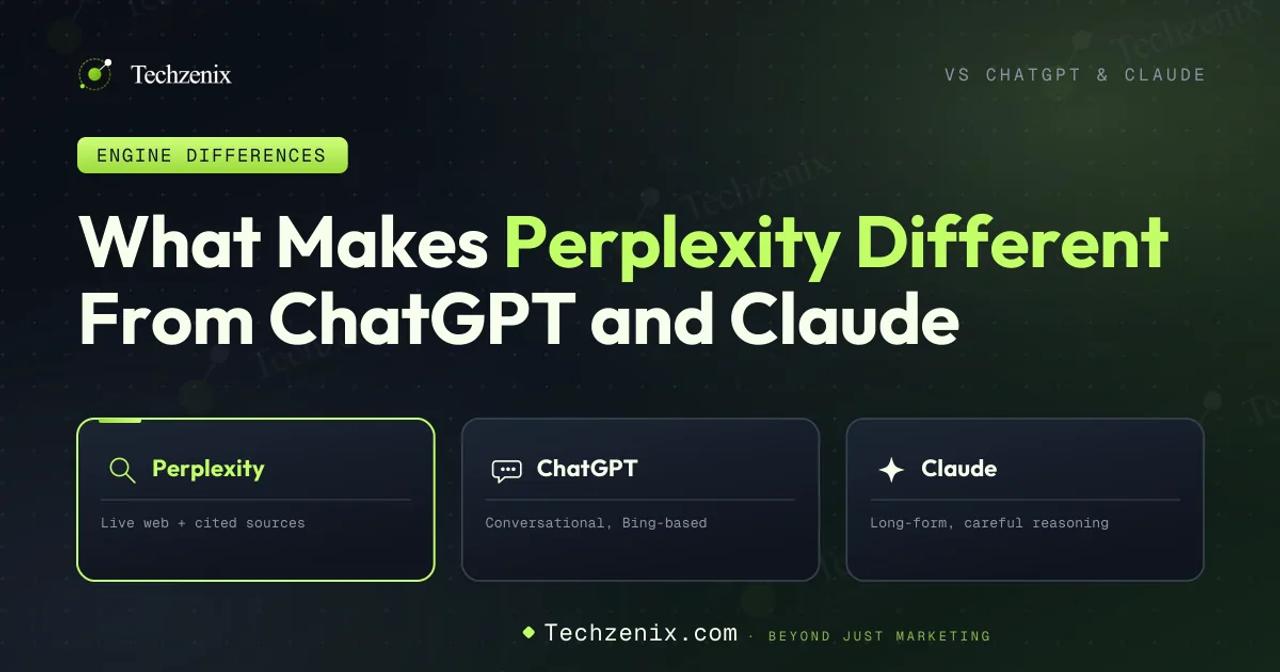
Perplexity has three characteristics that separate it from other AI search engines. Understanding these changes what you prioritize.
Difference One: Freshness Weighs More Than Anywhere Else
Perplexity gives strong weight to recently published or updated content. A page updated last week often gets cited over a much stronger page from two years ago, even when the older page ranks better in Google. This is the single biggest reason many established SEO teams underperform on Perplexity. They rely on evergreen content that is technically evergreen but not visibly fresh.
Difference Two: Community Content Gets Cited Heavily
Perplexity cites Reddit threads, forum discussions, and community Q and A pages far more than ChatGPT does. This reflects Perplexity's product philosophy that community discussion often contains ground truth that polished marketing content lacks.
Practical implication: presence on Reddit, Stack Overflow, and industry forums matters for Perplexity visibility. Owned content is not the only path to Perplexity citations.
Difference Three: Named Author Byline Signals Weigh Heavily
A page with a named expert byline, credentials, and links to their broader work gets cited more often than the same content published anonymously. Perplexity's ranking model appears to weight author signals particularly strongly for topics where expertise matters (medical, legal, financial, technical).
The Content Patterns Perplexity Cites Most Often
Based on tracking client citation patterns across the last 12 months, five patterns come up repeatedly in what Perplexity chooses to quote.
Pattern One: Direct Answers With Clear Attribution
A page that answers the question in the first paragraph, sources any statistics used, and closes with clear author attribution gets cited more than the same information buried in a long form article without those signals.
Pattern Two: Numbered Lists and Ranked Comparisons
Perplexity extracts numbered lists efficiently. If your content includes ordered steps, ranked recommendations, or numbered points, it gets pulled into responses at a higher rate than equivalent prose content.
Pattern Three: Recent Statistics and Data Points
Content that includes specific, recent statistics from cited sources gets cited more. "According to a 2026 study by X" beats "studies show" every time.
Pattern Four: Structured Comparison Tables
When users ask comparison questions (X versus Y, best of category), Perplexity strongly prefers pages with comparison tables. The extraction step handles tabular data cleanly. Prose comparisons still work but tables get preference.
Pattern Five: FAQ Sections
A well structured FAQ section with FAQPage schema catches long tail questions that Perplexity surfaces frequently. This is one of the highest ROI single actions for Perplexity SEO.
Freshness: The Single Biggest Perplexity SEO Lever
If you take away only one thing from this guide, this is it. Perplexity weighs freshness so heavily that a serious refresh strategy alone can transform your citation performance.
What Perplexity Considers Fresh
Perplexity looks at several freshness signals:
Published date visible on the page
Last updated or modified date, both visible and in schema
Recency of the year mentioned in content (2026 signals fresher than 2023)
Recency of statistics and examples cited
How recently the URL was crawled by PerplexityBot
Building a Freshness Strategy
For every important page, plan a refresh cycle:
Update the visible year in title and intro ("2026" not "2024")
Add or update the "Last updated" date visibly on the page
Refresh statistics with recent numbers from cited sources
Add a fresh angle or new section to signal substantive update
Update the datePublished and dateModified in schema markup
A quarterly refresh cycle for top pages is a reasonable minimum. Monthly refreshes for high priority pages can pay off.
Page Level Optimization for Perplexity
Here is the exact page level checklist for Perplexity optimization. Apply this to any page you want cited.
Rewrite Your First Paragraph as a Direct Answer
For every page you want cited, the first paragraph should answer the target question directly. No setup. No context. Answer first, expand after.
Add Recent Statistics With Source Links
Include at least 2 or 3 recent statistics with linked sources. This adds citation weight and gives Perplexity extractable data points.
Structure H2 Sections as Question Answers
Each H2 should stand alone. If a reader landed on just that section, would they get value? Perplexity often extracts single sections rather than reading full pages.
Add Named Author Byline With Credentials
Real name, real bio, real credentials, LinkedIn link. Anonymous or generic bylines cost you citations.
Update Publication Dates
Both visible on the page and in schema (datePublished and dateModified). Freshness signals from schema and visible dates work together.
Add FAQ Section With FAQPage Schema
Six to twelve questions covering variations of the main topic. This is one of the highest yield actions for Perplexity SEO.
Include a Comparison Table Where Applicable
For any content that involves comparing options (tools, methods, providers), add a comparison table. Perplexity extracts tables cleanly.
Crawler Access: Let PerplexityBot Read Your Content
Perplexity's crawler is called PerplexityBot. For citation eligibility, PerplexityBot needs access to your site.
The Minimum robots.txt Configuration
If you want Perplexity citations, allow PerplexityBot explicitly:
User-agent: PerplexityBot Allow: /
Perplexity User User Agent
Perplexity also uses a separate identifier when it visits pages on behalf of a specific user query. This is called Perplexity User. Blocking this affects your visibility when Perplexity fetches content in real time for a user session.
The Publisher Program
Perplexity runs a Publisher Program that gives publishers revenue share on citations and better indexing. Details are available at Perplexity's Publisher Program page. For most brands, joining is worth the low friction application.
The Community Angle Most SEO Teams Miss
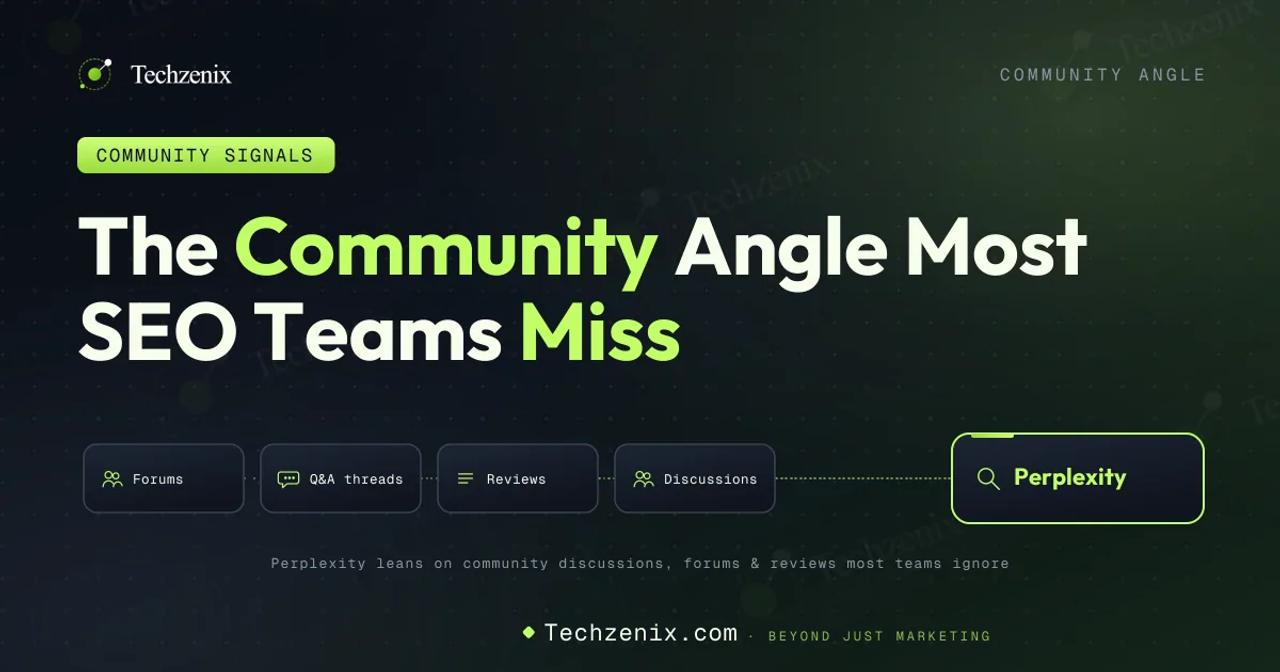
Perplexity cites Reddit, Stack Overflow, Quora, and industry forums more than any other major AI search engine. This is a citation opportunity that lives outside owned content.
Reddit Presence Strategy
Genuine participation in relevant subreddits builds citation surface area. Not spammy self promotion, real contribution. Answer questions in your subject area. When you have a resource worth linking, share it with context. Redditors detect and downvote pure promotion, so this needs to be genuine.
Stack Overflow and Technical Communities
For technical topics, Stack Overflow answers rank in Perplexity citations frequently. If your team has technical expertise, contributing high quality answers to Stack Overflow builds citation presence that owned content cannot easily match.
Industry Forums and Discord Communities
Industry specific forums and public Discord archives get cited when Perplexity searches for specialized topics. Presence in these communities pays off in citations that other channels cannot.
How to Measure Perplexity Citations
Perplexity citations do not show in your normal analytics. Measurement needs a dedicated approach.
Manual Tracking Setup
Build a spreadsheet with your top 20 buyer research queries. Once per week, run each through Perplexity in Quick Search, Pro Search, and Deep Research modes. Log which sources get cited and whether your brand appears.
This is manual work. It is also the ground truth. Automated tools help but nothing beats manual tracking for accuracy and understanding.
Automated Tools for Perplexity Tracking
Several tools now cover Perplexity citation tracking. Category is young and evolving.
| Tool | What It Tracks | Best For |
|---|---|---|
| Otterly.AI | Brand mentions across Perplexity, ChatGPT, Gemini, Claude | Teams needing multi-engine coverage |
| Peec AI | Citation share of voice against competitors on Perplexity | Competitive benchmarking on AI search |
| Profound | Deep AI answer engine analytics for Perplexity Pro | Enterprise teams with dedicated GEO budget |
| Ahrefs Brand Radar | Brand mentions in Perplexity-generated responses | Teams already on Ahrefs |
| Semrush AI Toolkit | AI visibility including Perplexity tracking | Teams already on Semrush |
Recommendation: start with manual tracking of top 20 queries. Build the baseline first. Then invest in a tool if the scale of tracking justifies the spend.
Six Mistakes That Kill Perplexity Visibility
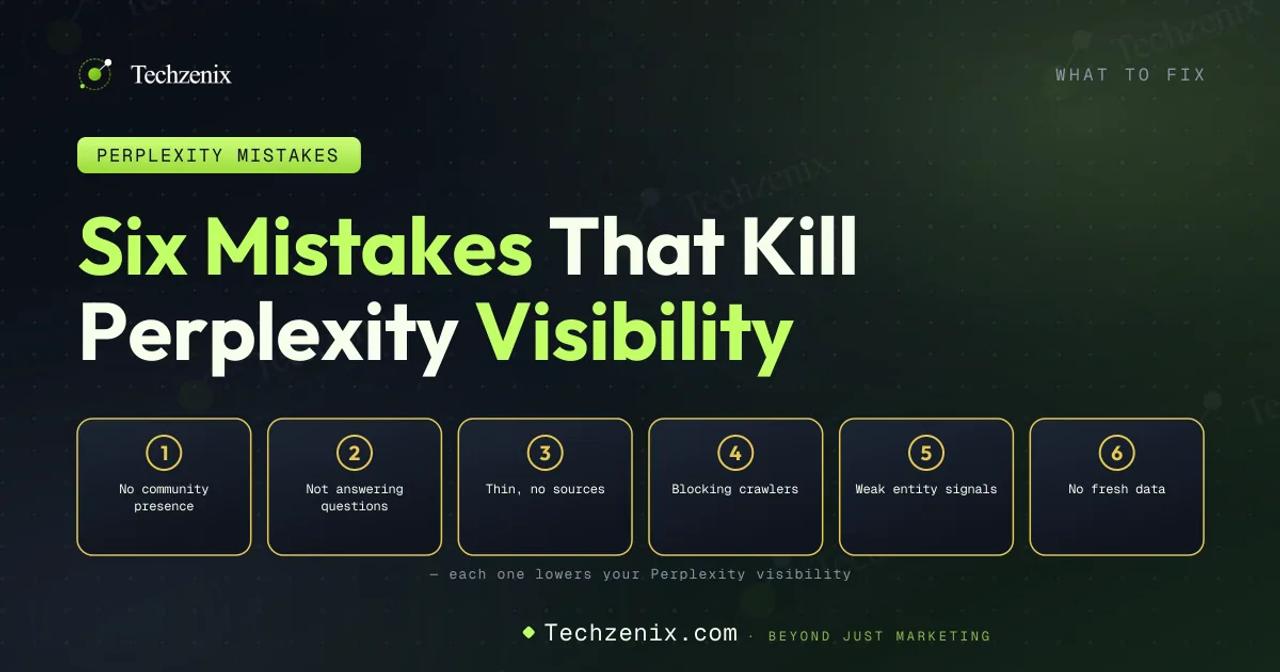
Mistake One: Treating Perplexity Like Google
What ranks in Google does not automatically win in Perplexity. Perplexity weighs freshness far more, and older top ranking pages often lose to fresher weaker pages. Adjust expectations and tactics.
Mistake Two: Ignoring Freshness Signals
Publishing evergreen content and never touching it again kills Perplexity performance. Every important page needs a refresh cycle.
Mistake Three: Blocking PerplexityBot Without Understanding Impact
Some publishers blocked PerplexityBot in 2024 during content protection debates. If your business model benefits from AI visibility, allowing the crawler is usually the right call.
Mistake Four: Anonymous or Generic Bylines
Perplexity weights author signals heavily. Pages published by "the team" or "admin" get cited less than pages with named experts.
Mistake Five: No FAQ Section
Perplexity surfaces FAQ answers frequently. Pages without FAQ sections miss a significant citation surface.
Mistake Six: Ignoring Community Presence
Focusing only on owned content while ignoring Reddit and community participation leaves a whole citation channel unused.
Your 30 Day Perplexity SEO Starter Plan
Focused plan for teams starting Perplexity SEO. Adjust to your resources.
Week 1: Audit and Baseline
- List your 20 most important buyer research queries
- Run each through Perplexity Quick Search, Pro Search, and Deep Research
- Log which sources get cited and whether your brand appears
- Check your robots.txt against PerplexityBot
- Review your top 10 pages for freshness signals (dates, current statistics)
Week 2: Foundation and Freshness
- Update robots.txt to allow PerplexityBot
- Apply to Perplexity Publisher Program if eligible
- Add visible "Last updated" dates to top 20 pages
- Update datePublished and dateModified in schema
- Refresh statistics on your top 10 pages
Week 3: Content Rework
- Rewrite the first paragraph of top pages as direct answers
- Add FAQ sections with FAQPage schema to pages that lack them
- Update author bylines with credentials and LinkedIn links
- Add comparison tables where content benefits from them
Week 4: Community and Measurement
- Identify 3 to 5 relevant subreddits or communities to participate in
- Contribute 2 genuine helpful posts (not promotional)
- Rerun the top 20 queries and compare against Week 1 baseline
- Log improvements and plan the next 30 days
Where to Go From Here
Perplexity is the AI search engine that rewards the specific combination of fresh, well structured, authoritatively bylined content. Brands that get this combination right win citations that other channels cannot deliver. Brands that ignore Perplexity leave visibility on the table with an audience of exactly the people who research thoroughly before buying.
If your team has capacity, follow the 30 day plan above. If your team is at capacity or you want to move faster, this is exactly what our practice handles day to day.
Ready to get your brand cited by Perplexity?
Techzenix runs full AI search optimization engagements for brands ready to show up in Perplexity, ChatGPT, Claude, and Google AI Overviews. We handle everything from crawler setup and freshness strategy to citation tracking. Learn more about our generative engine optimization services or request a proposal .
Frequently asked questions
How does Perplexity choose which sources to cite?+
Perplexity uses its own PerplexityBot crawler combined with real time search from sources including Bing. It picks sources based on relevance to the query, content freshness, structural clarity, author authority, and citation quality. Freshness weighs heavier than in most other AI engines.
How is Perplexity SEO different from Google SEO?+
Perplexity weighs freshness much more than Google, cites community content more heavily, and gives strong weight to named author bylines. Google's ranking factors focus on link authority, content quality, and page experience. Both matter but the emphasis differs enough to require distinct tactics.
Does Perplexity use Bing or its own crawler?+
Both. Perplexity has PerplexityBot for indexing pages into its own database and also pulls real time results from Bing and other sources. Bing indexing helps but is not the only path in.
How long does it take to see results from Perplexity SEO?+
Faster than traditional SEO. Because Perplexity weighs freshness heavily, a serious refresh of top pages often shows citation improvements within two to three weeks. Full impact from structural changes usually shows within 30 to 60 days.
Should I join the Perplexity Publisher Program?+
For most brands, yes. The friction to apply is low, and joining can improve indexing plus offer revenue share on citations. Publishers with strict content licensing concerns may need to review the terms carefully first.
Does Perplexity cite paid content or sponsored posts?+
Perplexity does not treat sponsored content as paid placement in citations. However, sponsored posts published on high authority publications still get cited if they meet quality and relevance standards. The path to Perplexity visibility is content quality, not payment.
How much traffic do Perplexity citations actually drive?+
Direct traffic from Perplexity citations is typically modest compared to Google organic clicks. The value is different. Perplexity citations are brand visibility in front of high intent researchers. Measure by mention share, not just click through traffic.
Can I get cited by Perplexity without a high DR?+
Yes. Perplexity cites DR 50 sites regularly when content is fresh, well structured, and directly answers the question. This is one of the rare channels where content quality genuinely beats link authority for smaller brands.

Ali Hamza is an SEO specialist and digital marketer with 7+ years of experience in SEO, content strategy, WordPress, and online growth marketing. He shares practical insights and industry-based strategies focused on improving search visibility, user experience, and long-term organic growth.