Large Language Model (LLM) SEO is the practice of optimizing your content so that AI systems like ChatGPT, Claude, Gemini, and Perplexity retrieve and cite it when generating answers. It sits at the intersection of traditional SEO and information retrieval, and requires understanding how these models actually find and select sources.
This guide covers the two mechanisms LLMs use to surface content (training data and live retrieval), how retrieval augmented generation (RAG) works, why content chunking matters more than keyword density in 2026, and a practical 30 day plan to earn LLM visibility. Written for SEO leads, marketers, and founders who want to understand the technical layer, not just the surface tactics.
What LLM SEO Actually Means
LLM SEO refers to optimizing your website content, entity signals, and technical setup so that large language models retrieve, understand, and cite your content when generating answers for users.
Traditional SEO optimizes for search engine crawlers that rank pages. LLM SEO optimizes for retrieval systems that pull content chunks into generated answers. The mechanisms are different, which is why the tactics diverge in meaningful ways.
Every major AI assistant now retrieves content in real time. ChatGPT Search uses Bing plus its own crawler. Perplexity has PerplexityBot combined with Bing. Claude Search uses its own crawler. Gemini uses Google's index. When users ask questions, these systems fetch relevant pages, break them into chunks, and generate answers. If your content is not retrievable and quotable, you are invisible in this new layer of search.
LLM SEO is a specialised part of the broader Generative Engine Optimization framework our team maintains. This guide focuses specifically on the retrieval side. If you want the full picture across all AI engines, start with the parent guide.
How Large Language Models Actually Retrieve Content
Most LLM SEO guides skip this section. Understanding the mechanism separates real optimization from cargo cult tactics.
The Retrieval Augmented Generation (RAG) Pattern
Retrieval Augmented Generation is the pattern most modern AI search systems use. It combines a language model with an external knowledge source. When a user asks a question, the system does five things in sequence:
Rewrites the user question into one or more search queries
Runs those queries against a search index (Bing, Google, or the system's own crawler)
Fetches the top ranking pages and breaks each into chunks (usually 200 to 500 tokens each)
Converts each chunk into a vector embedding and compares against the query embedding for semantic relevance
Passes the most relevant chunks to the language model, which synthesizes an answer with citations
What This Means Practically
Your entire page does not get read by the model. Only the most relevant chunks do. A page that ranks well but has no clearly extractable chunks loses to a page ranks slightly lower but has clean, self contained sections.
This is why traditional SEO tactics like keyword density are less important than they used to be. What matters more is whether your content produces retrievable chunks that answer specific questions clearly.
Training Data vs Live Retrieval: The Two Fronts
There are two mechanisms through which LLMs surface your brand. They need different tactics.
Training Data Presence
When AI models train, they ingest large datasets scraped from the web. The scale and nature of your brand presence at the time of training shapes what the model knows about you when it generates answers without live search.
Practical implications:
Entity building work done today feeds the next training cycle
Mentions on high authority sites carry disproportionate weight in training
Wikipedia and Wikidata entries feed almost all models
Consistent brand information across the web reduces model confusion
This is a long term investment. Content you publish today may not affect model behavior for 6 to 18 months.
Live Retrieval Through Search
When users ask questions that need current information, the model runs a live search. This is faster feedback territory. Optimizations here can show results within weeks.
Practical implications:
Search ranking (especially in Bing) directly affects retrieval eligibility
Content freshness matters more than in training
Chunk quality and structure determine whether you get quoted
Technical accessibility to AI crawlers is required
The Right Balance
Optimize for both. Live retrieval work shows faster results and forms the foundation. Training data presence pays off over quarters but shapes long term brand recognition inside the models. Skip either front and you leave visibility on the table.
Content Structure That LLMs Actually Retrieve
The single biggest shift required for LLM SEO is rethinking content structure around chunks. Here is what actually works based on tracking retrieval patterns across client sites.
Chunk Optimized Sections
Every H2 section should stand alone. If a reader (or the model) landed only on that section, would they get complete value? If not, restructure.
Practical test: take any H2 section, copy just that section into a blank document, and read it. Does it make sense? Does it answer a specific question? If yes, your chunk is retrievable. If no, the model will struggle to extract it cleanly.
Answer First Paragraphs
For every H2 that poses a question, the first paragraph should answer it directly in 40 to 60 words. This is the paragraph most likely to be extracted as a chunk. Setup, background, and context should come after the answer, not before.
Semantic Density
Content with high semantic density (lots of specific facts, named entities, and concrete statements) gets retrieved more than fluffy prose covering the same topic. Vector embeddings compare semantic meaning, and dense content produces more distinct embeddings that match more queries.
Named Entity Density
References to named entities (products, companies, people, technologies, methodologies) help the model understand what topic your content covers. Consistent use of the same entity names across pages reinforces topical authority in embedding space.
Structured Data and Tables
Comparison tables, numbered lists, and structured data get extracted more efficiently than the equivalent information in flowing prose. The model can preserve table structure in the generated answer, which increases the chance your content is used.
Clear Section Boundaries
Chunks work better when section boundaries are clear. Use H2 and H3 headings that name the specific concept in the section. Avoid narrative structure where one section flows into the next without clear delineation.
Technical Setup for LLM Discoverability
Before content optimization matters, you need the technical foundation. LLMs cannot retrieve content they cannot access or index.
Allow AI Crawlers
Every major AI system has its own crawler. If you want visibility, allow them. The main ones to configure in robots.txt:
AI crawlers vary in their JavaScript rendering capabilities. Content that only renders after JavaScript executes may not get extracted. If you use React, Vue, or similar frameworks, verify that critical content appears in the initial HTML response, not just after hydration.
ChatGPT Search, Perplexity, and several other AI systems use Bing as a base search layer. Bing indexing is required for visibility in these systems, not optional.
Semantic HTML helps parsers extract content correctly. Use proper heading hierarchy (H1 to H2 to H3), semantic tags (article, section, main), and clear content structure. Div soup with no semantic meaning is harder to parse.
Entity Signals That Make LLMs Recognize You
LLMs work with entities more than keywords. An entity is a distinct concept the model recognizes as a real thing: your brand name, your founder, your product category. If the model recognizes your brand as an entity associated with your topic, you become a citation candidate. If not, you are invisible even with perfect content.
Wikidata Entry
Wikidata is the structured data source behind Wikipedia and one of the most influential entity databases feeding AI models. A Wikidata entry for your brand and key people establishes entity presence at the source. This is worth the effort.
Consistent Schema Across Site
Organization, Person, Product, and sameAs schema markup helps models connect your entity across sources. Every brand mention should be traceable back to your canonical entity.
Cross Platform Consistency
Your brand name, description, category, and key people should be consistent across your site, LinkedIn, Crunchbase, industry directories, and press mentions. Inconsistency confuses the entity resolution process.
Named Author Attribution
Every piece of important content needs a named author with a real bio, credentials, and links to their broader work. This is one of the strongest signals for LLM citation weight. Anonymous content gets cited significantly less.
Authoritative Third Party Mentions
Being mentioned on authoritative third party sites in your category reinforces your entity relevance. This is why digital PR and thoughtful outreach have new value in the LLM era. The links matter but the mentions matter almost as much.
How to Measure LLM Visibility
Traditional analytics do not show LLM citations. Measurement needs a dedicated approach.
Manual Tracking as the Foundation
Build a spreadsheet with your top 20 buyer research queries. Weekly, run each through ChatGPT, Claude, Perplexity, and Gemini. Log which sources get cited and whether your brand appears. This is manual work but it is the ground truth. Nothing beats it for accuracy and building intuition.
Automated Tools for LLM Visibility
The category matured through 2025 and 2026. Several tools now automate LLM citation tracking.
Tool
What It Tracks
Best For
Otterly.AI
Brand mentions across ChatGPT, Claude, Perplexity, Gemini
Teams needing multi-model coverage
Peec AI
Citation share of voice across LLMs
Competitive benchmarking
Profound
Deep LLM answer analytics and prompt tracking
Enterprise budgets
Ahrefs Brand Radar
Brand mentions in LLM-generated responses
Teams already on Ahrefs
LLMrefs
LLM citation tracking with source analysis
Dedicated LLM SEO focus
Semrush AI Toolkit
AI visibility tracking including LLM citations
Teams already on Semrush
Recommendation: start with manual tracking of top 20 queries. Once you have a baseline and understand what you are measuring, invest in a tool. Tools before baseline usually wastes budget.
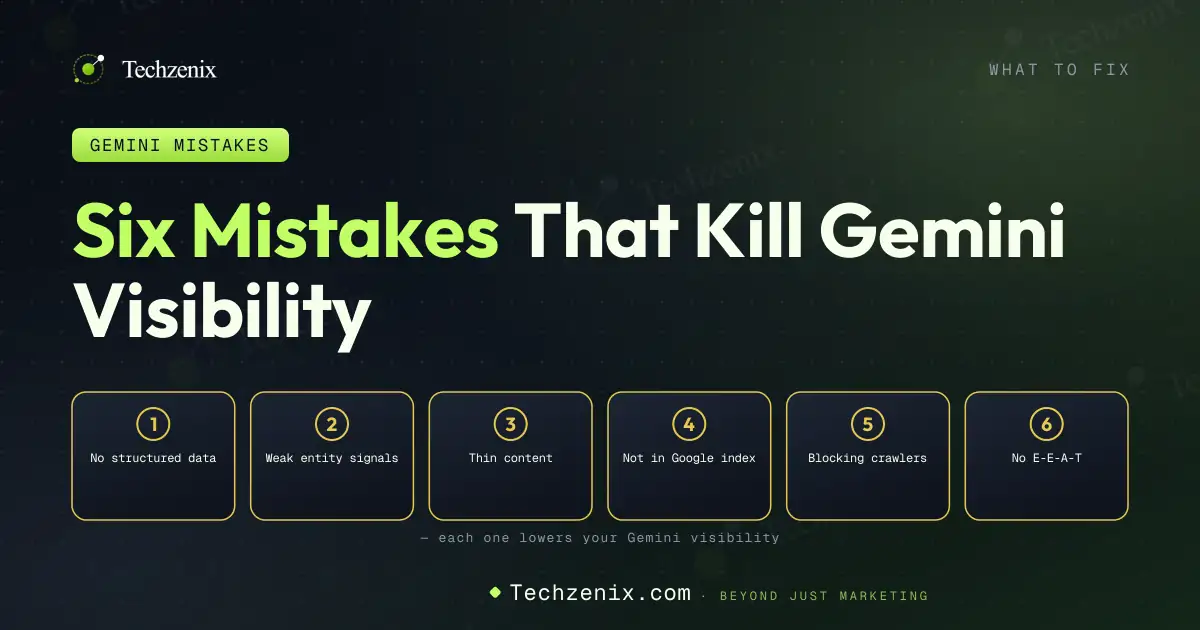
Six Mistakes That Kill LLM Visibility
Mistake One: Treating LLM SEO as Separate From Traditional SEO
LLMs use search indexes. If your traditional SEO foundation is weak, your LLM visibility is weak. Fix the fundamentals first. Rankings, technical health, content quality. LLM SEO is a layer on top, not a replacement.
Mistake Two: Ignoring Chunk Structure
Publishing long form content without clear chunk boundaries costs you retrievals. Every important page should have H2 sections that stand alone. Test by extracting any section into a blank document. Does it still answer a question? If not, restructure.
Mistake Three: Blocking AI Crawlers
Some teams blocked GPTBot, ClaudeBot, and others during the 2023 to 2024 content protection panic. If your business benefits from AI visibility, allow the crawlers. If you sell content directly, this is more nuanced. Understand the tradeoff before you decide.
Mistake Four: Skipping Entity Building
Teams focus on content and skip Wikidata entries, schema markup, and consistent cross platform presence. Entity signals feed both training data and live retrieval. Skip them and you handicap both fronts.
Mistake Five: Anonymous or Weak Author Attribution
Content published by "the team" or with weak bylines gets cited less. Every important page needs a named expert byline with credentials and links to their broader work.
Mistake Six: Only Measuring Traffic
LLM citations are visibility, not always traffic. Someone reading an AI answer may never click through but still remembers your brand. Add citation share metrics to your measurement stack. Traditional click metrics miss the LLM SEO impact entirely.
Your 30 Day LLM SEO Starter Plan
A focused plan for teams starting LLM SEO work. Adjust to your resources.
Week 1: Audit and Baseline
List your 20 most important buyer research queries
Run each through ChatGPT, Claude, Perplexity, and Gemini
Log which sources get cited and whether your brand appears
Check your robots.txt against the six main AI crawlers
Verify server side rendering is delivering content in initial HTML
Week 2: Technical Foundation
Update robots.txt to allow all major AI crawlers
Submit sitemaps to Bing Webmaster Tools
Enable IndexNow through your CMS
Verify or create Wikidata entries for your brand and key people
Audit and fix Organization, Person, and Article schema across the site
Week 3: Content Rework
Rewrite the first paragraph of top 10 pages as direct answers
Restructure H2 sections so each stands alone as a complete answer
Add named author bylines with credentials and LinkedIn links
Add or refresh comparison tables where content supports them
Update visible publication and modified dates
Week 4: Measurement and Iteration
Rerun the 20 baseline queries and compare against Week 1
Log which changes moved citations and which did not
Set up weekly ongoing tracking for the top 20 queries
Plan the next 30 days based on what worked
Where to Go From Here
LLM SEO is not a passing trend. Large language models are now a permanent layer in how buyers research vendors, tools, and services. Every quarter that passes without work here is share of consideration lost to competitors who did the work. The good news is that the field is young enough that a serious effort today builds advantage that compounds for years.
If your team has capacity, follow the 30 day plan above. If your team is at capacity or you want to move faster, this is exactly what our practice handles day to day for clients across SaaS, ecommerce, and professional services.
Next step
The one thing to do after reading this
Say what happens when they act, not what you want them to click.
Generative Engine Optimization is the broader discipline of optimizing for AI generated answers across engines like Google AI Overviews, ChatGPT, Perplexity, and Claude. LLM SEO is a subset focused specifically on the retrieval mechanics of large language models. The tactics overlap significantly but LLM SEO goes deeper on chunking, embeddings, and technical retrieval. See our parent framework covering all AI engines for the full picture.
Is LLM SEO replacing traditional SEO?+
No. LLM SEO builds on traditional SEO. Rankings still drive traffic and still feed AI retrieval systems. Think of LLM SEO as an extension, not a replacement. Teams that skip fundamentals to chase LLM tactics rarely see results.
How long does LLM SEO take to show results?+
For live retrieval improvements, expect 2 to 6 weeks. Chunking, schema, and crawler access changes show up quickly. For training data effects on model knowledge, expect 6 to 18 months as models train on new content.
Which LLMs matter most for LLM SEO in 2026?+
ChatGPT, Perplexity, Claude, and Gemini cover the majority of user AI interactions. Google AI Overviews is technically a Gemini application inside Google Search. Bing Copilot shares mechanics with ChatGPT. Focus optimization work on these five surfaces.
Do I need different content for each LLM?+
No. Well structured content typically performs across engines. Where they differ is in weighting (freshness, author signals, structured data). A single content piece with strong chunking and clear structure can be optimized for all major LLMs at once.
Should I block AI crawlers from my site?+
This is a strategic choice. Blocking prevents content from being used in training and reduces live citation visibility. For most B2B and service brands, visibility outweighs the tradeoff. For publishers selling content directly, the calculation is different.
What schema types matter most for LLM SEO?+
Article, FAQPage, Organization, Person, and HowTo carry the most weight. Product and Review matter for ecommerce. BreadcrumbList and sameAs help entity resolution across sites.
Can small brands compete with big brands in LLM SEO?+
Yes. LLMs weight content quality, freshness, and structural clarity more than raw link authority in many cases. A well structured expert authored piece from a small brand can beat a corporate stub. This is one of the rare channels where content merit competes fairly with domain authority.
Ali Hamza is an SEO specialist and digital marketer with 7+ years of experience in SEO, content strategy, WordPress, and online growth marketing. He shares practical insights and industry-based strategies focused on improving search visibility, user experience, and long-term organic growth.